All illustrations by the talented liuzishan on Magnific
Table of Contents
I’m writing this after 16 hours of work to find three simple numbers.
Healing values for the three power tiers of basic healing features in Beyond the Hearth.
That’s it. Three numbers.
I’ve run dozens of simulations, changed variables back and forth, compared the results to our playtests, and played through combat scenarios alone at 3 a.m.
Why is healing in TTRPGs so damn hard to balance?!
Somewhere along the way, I started looking at how other games approach healing.
TTRPGs. Video games. Board games. Different resource systems, health systems and approaches to healing.
Only to arrive at roughly the same conclusion everywhere: Healing is incredibly hard to balance.
How do I make healers powerful enough to feel rewarding without allowing them to negate everything the Narrator throws at the party?
And, maybe more importantly, how do I make healing more interesting than pressing the “More HP” button whenever someone’s health gets low?
The narrow road of healing balance
Stray too far in one direction and healers feel underwhelming. You can barely keep your allies alive for longer than they would survive without you. Healing for negligible amounts feels like half-hearted game design, driven by a fear of making healing too powerful.
Stray a little too far in the other direction and the Narrator suddenly can’t outdamage the healer. Combat turns into a slow, dragging fight towards 0 HP, with enemies dealing damage and the healer immediately undoing it.
We’ve already experienced both extremes in playtests.
Our previous healing system was far too strong, although I didn’t fully realise it until one of our players started really honing in on his healing features.
Suddenly, he was basically negating foes completely and still dealing damage.
We heard something similar during our first playtest with another group. The Augur of the Bloomwarden Verdant kept defaulting to healing because, in his opinion, his other features were simply too weak by comparison.
So I nerfed healing.
Mathematically, it was still strong.
But the feedback changed almost immediately: Healing now felt useless.
That difference between mathematical strength and perceived strength has been one of my biggest lessons from the past year of game development.
A mechanic can be wildly overpowered while feeling underwhelming at the table. And the opposite can be true as well.
Which means balancing healing cannot just be about finding the correct number, however many spreadsheets, formulae and simulations I throw at it.
We also have to press the right buttons in those players monkey brains.
Unfortunately, because finding the correct number is already hard enough.
Healing should be an option, not a requirement
One of our core wishes for Beyond the Hearth is that every reasonable party composition should be viable.
Four dead-ass squishy mages? Go for it.
It should be possible, even viable. But positioning suddenly matters a lot more than it would with a supporter and a frontliner backing you up.
Different compositions should come with different trade-offs.
What I don’t want is someone sitting down at the table and hearing:
“Okay, one of us has to play the healer.”
I’ve had enough of this meme in Overwatch back in the day.
Healing should be one strategic option among many, just like choosing damage over time instead of burst damage, buffing an ally instead of debuffing a foe, or focusing on crowd control rather than raw damage.
You should be able to play without a healer, with one healer or even with multiple healers.
And none of those choices should fundamentally break encounter balancing.
That sounds simple enough.
Making the mechanics support it is another story.
Why I deliberately removed low-cost healing
One of my first conclusions was that spammable healing seems to be one of the biggest sources of imbalance.
If you can repeatedly restore HP at very little opportunity cost, healing becomes incredibly powerful over the course of a fight, even when each individual heal feels rather insignificant.
That’s why I deliberately decided against Signature 2 healing or healing through Manoeuvres.
But that immediately creates another problem.
Beyond The Hearth Archetypes and Paths rely on their fantasy being available on Level 1 and getting stronger, more massive from that point onwards.
I want characters whose fantasy revolves around healing to actually be able to heal from the beginning of the game. Not just starting Level 3.
At Levels 1 and 2, characters only have access to Signature 2 and Signature 4 features.
So healing needs to exist at Signature 4, if it doesn’t at Signature 2.
And a Signature 4 feature can be used roughly once per turn.
Isn’t that just spammable healing again?
Not quite.
Because healing has an opportunity cost.
In Beyond the Hearth, you have 4 Action Points per turn and generate around 3 to 4 Archetype Resource per turn.
A Signature 4 costs 2 Action Points and 4 Archetype Resource, consuming roughly 70% of your combined power budget for that turn.
You’re committing a significant portion of your resources to healing instead of using them to deal damage, buff an ally, debuff a foe or save up for a more powerful Signature.
That gives me an important balancing lever beyond simply reducing healing values: When do players start thinking about if they even want to heal that turn, or save up for a stronger heal later on.
The problem with scaling healing
Beyond the Hearth has another design constraint that makes healing particularly tricky.
We want the Signatures and Manoeuvres you learn early on to remain relevant throughout the entire game.
You might still use the same Signature 2 at Level 12 that you used at Level 1, dealing the same 3d6 damage.
Progression comes primarily from broadening your feature pool and creating new strategic interactions, rather than simply increasing damage numbers.
But HP values increase with level.
Which means healing can’t remain completely static.
If it did, your early healing features would become less relevant as characters progress.
But simply increasing healing without considering the rest of the system introduces another problem: if I balance enemy damage around increasingly powerful healing, parties without dedicated healers start falling behind.
That would undermine the whole idea of flexible party compositions.
So I needed a way to scale healing while keeping it proportionate to the HP of an average character at any level.
I also wanted healing to be reliable. While damage can involve randomness, I think players should know exactly how much HP they’re restoring.
That meant fixed healing values rather than dice, with formulae simple enough to calculate in the middle of combat.
And with patch 0.1.4, I wanted Attributes to play a larger role again.
Earlier in development, I deliberately reduced their importance out of fear of creating obvious must-have choices. Looking at you, D&D 5e Dexterity and Constitution.
I don’t want the illusion of choice when one or two Attributes are clearly superior for almost every character.
Instead, Attributes should help define how your character approaches combat, including how effectively they heal.
So I settled on level-based healing formulae, with Attributes contributing to their strength.
But finding the right multipliers was a different problem entirely.
How I came up with the numbers
I started with two things: our Threat Rating system and the question of how much longer healing should allow a party to survive.
Threat Rating: the foundation
In Beyond the Hearth, every adversary has a Threat Rating, representing the damage it can deal per turn across its features and mechanics.
Threat Rating also determines how much of an encounter’s budget that adversary consumes.
At Level 1, each player contributes 4 Threat Rating to the encounter budget. That increases by 2 for every additional level.
So a Level 4 character contributes 10 Threat Rating.
As characters level up, they gain more HP, so enemies need to deal more damage to keep fights from taking forever.
But Threat Rating is also tied to enemy HP.
At Level 1, a Threat Rating 4 adversary is roughly equivalent to one player. It should have enough HP to survive that player’s attacks for our intended combat length of five to six rounds.
By Level 4, that player can face roughly 10 Threat Rating, equivalent to two and a half of those adversaries.
Since player damage increases only slightly over time, the combined HP of those enemies still needs to be manageable within the same combat duration.
That means the HP of an individual adversary has to decrease as player levels increase, relative to its Threat Rating.
And that creates a side effect I really like.
An adversary that was terrifying early on, taking several hits to bring down, can later be dispatched much more easily.
But several of them together can still be dangerous.
With our Overkill mechanic, you might even cleave through multiple adjacent enemies with a single-target attack.
The same adversary that once required your full attention can eventually become one of several threats you’re dealing with at once.
That’s a kind of progression I find much more interesting than simply watching everyone’s damage numbers grow.
But back to the actual point of the article: healing.
Turning enemy damage into a healing budget
With Threat Rating established, I had a starting point for healing.
A player shouldn’t be able to outheal the damage of an equally powerful adversary over an entire fight.
Otherwise, a healer could potentially neutralise an enemy on their own, and we’re back to the exact problem I wanted to solve.
But calculating that number was harder than expected.
A healer doesn’t spend their entire turn healing.
With the Action Point and Archetype Resource costs involved, healing might consume roughly 50–70% of their available power budget.
The rest of their turn still contributes to the fight through damage, buffs, debuffs or other features.
And healing has another consequence: it tends to make fights longer.
Although a healed ally can survive and deal damage for more rounds, healing itself doesn’t increase the party’s immediate damage output.
For that moment, you’re giving up some of one player’s offensive contribution to keep the others fighting.
Causing fights to take longer, and therefore foes to deal damage more often as they die a little more slowly.
So I needed to account for three things:
- Resource investment: How much of a character’s turn is spent healing?
- Incoming damage: How much damage does an equally powerful adversary deal throughout the combat with the healer not dealing damage?
- Additional combat duration: How much longer should healing allow the party to fight so a fight doesn’t feel draggy?
For that last question, I settled on an initial target of roughly one additional round of combat on average.
Enough to make healing matter, without turning every encounter into a drawn-out war of attrition.
Running thousands of simulated fights
With those three cornerstones, I used ChatGPT to help build Monte Carlo simulations.
Essentially, I ran thousands of simulated fights with different party compositions, enemy combinations and healing values. Always directly refering the rule book for combat rules.
I looked at how long fights lasted, how often a party survived, and how likely different compositions were to win.
Then I adjusted the healing multipliers and ran the comparisons again.
And again.
And again.
But I quickly discovered another problem.
Combat is incredibly difficult to simulate accurately when positioning and player decisions matter so much.
A simulation can calculate damage and resource expenditure, but it can’t easily reproduce a player deciding to step in front of a wounded ally, retreating at the perfect moment or setting up a combination of features across several turns.
So the simulations aren’t giving me a definitive answer.
They’re helping me narrow down the possibilities before bringing them back to the table.
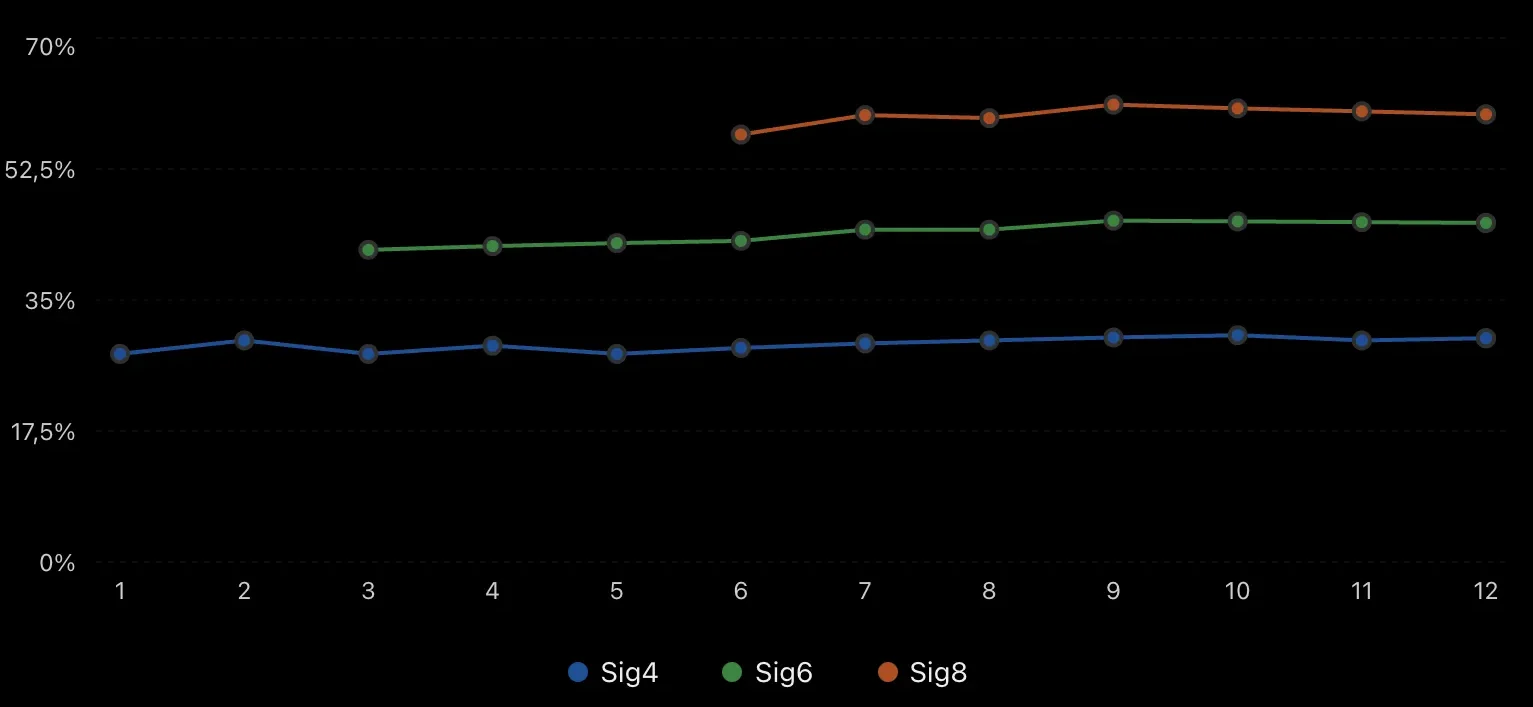
And after all of this, I ended up with three sets of healing values.
| Healing set | Signature 4 | Signature 6 | Signature 8 |
|---|---|---|---|
| Low | 15% Max HP | 35% Max HP | 50% Max HP |
| Medium | 25% Max HP | 40% Max HP | 55% Max HP |
| High | 30% Max HP | 45% Max HP | 60% Max HP |
These are the target proportions of an average character’s maximum HP that each Signature tier should restore throughout all levels.
All three sets are designed to make higher-tier Signatures more rewarding while keeping lower-tier healing relevant.
The formulae use level-based scaling, with Attributes contributing to healing strength. This is the High Healing Set in “feature language”:
| Signature Tier | Healing Value |
|---|---|
| 4 | Key Attribute + 2 × Level |
| 6 | Key Attribute + 4 × Level |
| 8 | 2 × Key Attribute + 5 × Level |
And we’re starting playtesting with the highest one.
I think overpowered mechanics are easier to identify than underpowered ones.
When something is strong, players use it. They build around it, push it to its limits and discover interactions you never could anticipate.
When something feels too weak, they might simply stop using it.
And then you’re left wondering whether the numbers are too low, the opportunity cost is too high or the mechanic just isn’t particularly fun.
It’s much harder to balance something nobody wants to try.
So we’ll start high, see what breaks, and adjust from there.
Healing is more than a number
Even with those values established, I still have to answer a different question:
What should healing actually feel like?
Let’s say a healer restores roughly 150 HP over a typical Level 6 combat.
A single burst heal that brings a half-dead ally back to full HP feels incredibly powerful.
A series of smaller heals that barely negate the damage of one minion might feel useless, even if they restore the same total amount over a fight.
An area-of-effect heal feels different when you first need to gather your allies around you.
And healing feels different again when you’re constantly worried about wasting part of it through overhealing.
I want healing throughout a fight to be viable, but I also want healing the right character at the right moment to be significantly more rewarding.
Most importantly, I don’t want healers constantly thinking:
“I guess I have to heal again.”
I’d much rather have them think:
“After everything I’ve set up over the last few turns, this is the perfect moment to heal.”
Making healing part of the loop
One of the foundations of Beyond the Hearth is something I call feature loops.
I love the way JRPGs let characters set up combos that lead to massive chain reactions across a party.
I wanted to capture that feeling both between characters and within a single character’s features.
You might use Feature A to set up Feature B, making it stronger or granting it an additional effect.
After that, Feature C might be the natural follow-up.
But if the situation suddenly changes, Feature D could become the much better choice.
Ideally, this creates a small set of meaningful decisions each turn rather than twenty equally viable options.
And it prevents combat from turning into repeatedly spamming whichever feature has the highest numbers.
Healing needs to fit into that philosophy.
I don’t want the optimal healer to spend every round pressing the same button because someone is missing HP.
I want healing to become part of their setup, payoff and adaptation to the battlefield.
I’m still figuring out exactly what those loops should look like for healers, but the goal is clear:
Healing should be a powerful part of your build, not the only thing your build does.
Healing HP, not CP
One of the more important decisions I’ve made is that healing currently restores HP, not CP.
In Beyond the Hearth, your health is split into two pools with very different purposes.
Health Points represent your surface health, while Core Points represent deeper, more lasting injuries.
When you fall to 0 HP, you immediately lose 1 CP.
Any further attack while at 0 HP reduces your CP by exactly 1, regardless of how much damage it would normally deal.
And once you reach 0 CP, your character is irretrievably dead.
Healing can bring you back into the HP range, but it doesn’t restore any CP you’ve already lost.
That distinction is deliberate.
Unlike HP, which fully regenerates after a night’s rest, CP only regenerates one point per night.
So letting someone drop to 0 HP and then simply healing them back up isn’t an ideal strategy.
You’ve already paid a lasting price.
And that’s important to me.
I don’t want the optimal healer to wait until someone collapses before finally deciding to heal them.
Healing should matter before a character reaches 0 HP, not just afterwards.
Two different kinds of danger
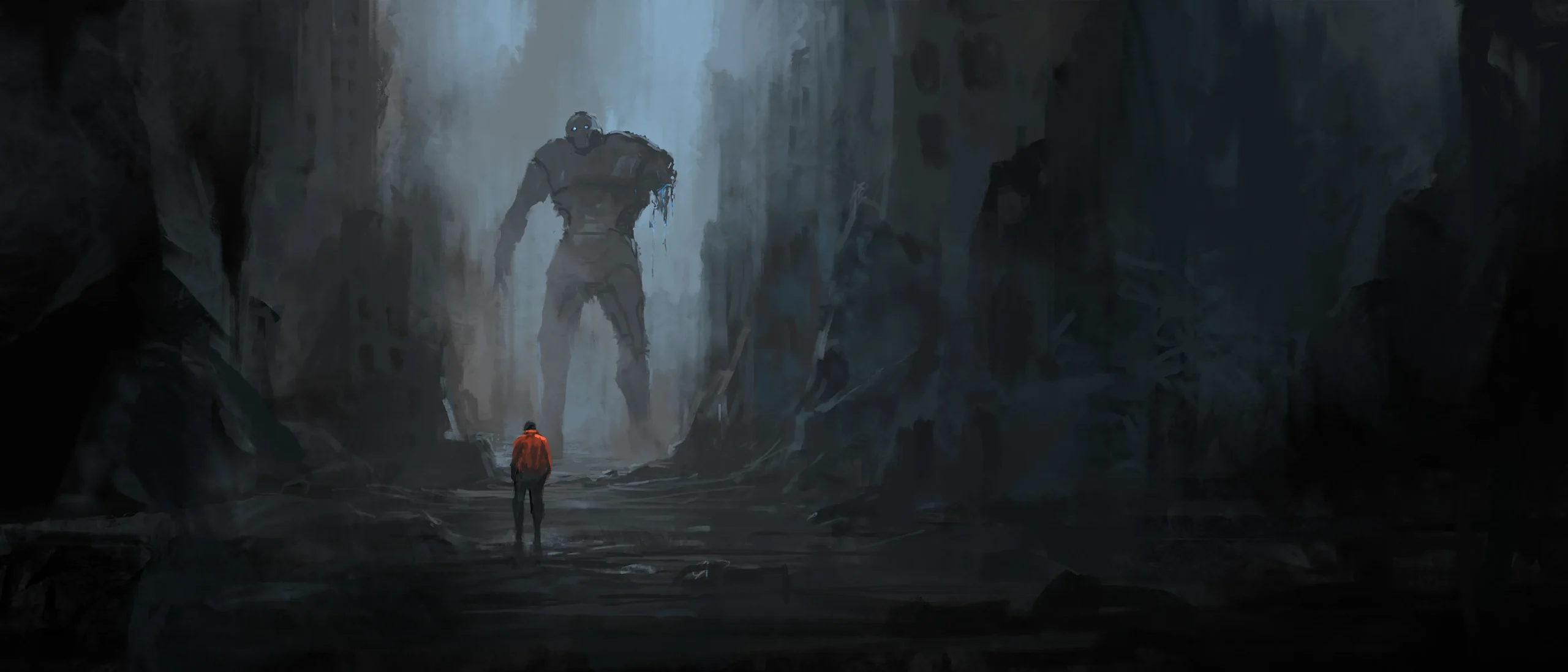
The distinction between HP and CP also changes how players evaluate threats.
While you still have HP, you can withstand several smaller attacks, making HP particularly useful against groups of weaker enemies.
But once you’re down to CP, the situation reverses.
A single attack from an epic Necromancer costs you exactly 1 CP.
So does a bite from a nasty rat.
Suddenly, being surrounded by five weak enemies might be much more dangerous than facing a single boss.
Against one powerful adversary, you might deliberately risk losing another CP rather than spend resources restoring HP that will immediately disappear.
Against a group of smaller enemies, getting back into HP could save your character’s life.
That gives healing a very different strategic role.
Healing changes which threats a character can afford to face, not just how much damage they can absorb.
Rotating who’s taking the damage
No single frontliner in Beyond the Hearth is supposed to have enough HP to tank an entire fight.
Even melee characters need to rotate, fall back and give each other room to recover.
Sometimes a squishy backliner might deliberately step in front of an injured ally, risking their own health to buy someone else another round.
Healing adds another option to that decision-making.
Should you heal your frontliner so they can hold the position a little longer?
Should someone else step forward while they recover?
Or should you save your Archetype Resource for a stronger Signature later, accepting the risk of losing some CP now?
Those are the decisions I want players to make.
Healing shouldn’t remove the need to rotate who’s taking damage. It should give the party more ways to manage that rotation.
And this extends beyond a single encounter.
CP is one of the Narrator’s tools for maintaining tension over the course of an adventure.
Do you risk another fight when your party is already wounded, knowing you might struggle against whatever comes tomorrow?
Do you retreat, learn more about your adversaries, prepare a better plan and come back later?
Or do you push on, hoping the reward justifies the risk?
I don’t want a healing feature to erase those decisions.
Since healing items are deliberately rare in Beyond the Hearth, having healing features in your Archetype should feel genuinely special.
Not because every party needs a healer, but because having one opens up strategic possibilities other groups might not have.
What we’ll actually be looking for in playtesting
With three sets of healing values prepared, the next step is finding out how they feel at the table.
And I’m not just looking at whether a healer wins too many fights.
I want to understand how healing changes the decisions players make.
For the healer:
Do they feel powerful?
Do they feel like they’re contributing something meaningful, or are they constantly giving up their other exciting features just to keep their mates alive?
Can they choose the right moments to heal, or does every turn feel like another mandatory heal?
For the Narrator:
Does the party regularly overwhelm adversaries because healing removes too much pressure?
Can enemies still threaten the group and carry out their intended game plan?
Or does the Narrator constantly feel the need to add more foes just to make combat interesting?
For the rest of the party:
Does having a healer change how aggressively they can play?
Do players still rotate who’s taking damage, or does healing make positioning and protecting wounded allies irrelevant?
And when the Narrator lands a particularly nasty critical hit, does healing provide that exciting safety net without making the threat meaningless?
Those are the questions that matter alongside the simulation results.
Because ultimately, healing shouldn’t remove the strategic problems combat presents.
It should give players more interesting ways to solve them.
The Narrator shouldn’t have healing in TTRPGs
One final consideration makes all of this even more important to me.
The Narrator.
A lot of TTRPG systems seem to quietly hand balancing problems over to the person running the game.
Healing too strong? Add more enemies.
Party dealing too much damage? Increase enemy HP.
Encounter too easy? Adjust things behind the screen.
You can compensate for almost anything that way.
But you’re also asking the Narrator to become a live balancing engine.
And I don’t want that.
The Narrator is still a player.
We’re all playing cooperatively, with the same goal: having a memorable, or at least really fun, evening together.
Running the game shouldn’t require a second full-time job.
Neither should playing it.
One of my biggest commitments with Beyond the Hearth is making encounters easy to create on the fly without sacrificing strategic depth, build variety or system mastery for either side of the table.
The Eierlegende Wollmilchsau
In Germany, we have a word for an imaginary thing that somehow does everything perfectly:
Eierlegende Wollmilchsau.
Literally, an egg-laying, wool-producing, milk-giving pig.
A magical farm animal that provides just about everything you could ever need.
And sometimes I feel like that’s what I’m trying to build.
A game where healing is powerful but not mandatory. Where healers feel rewarding to play without invalidating enemies. Where different party compositions are viable, combat stays strategically interesting, and the Narrator doesn’t need three hours of preparation just to make the maths work.
I know I’ll have to make trade-offs.
I already have.
And I’m still rather new to game design in general, learning new things every patch.
But I really want Beyond the Hearth to become something special, even if it’s only for a small group of people who happen to want the same things from a TTRPG that our table does.
For now, after 16 hours, I have three numbers.
Well.
Three sets of three numbers.
And a lot more questions.
But that’s probably progress.
So let’s see how they hold up in our next session.
If you want to follow the development of Beyond the Hearth, join our newsletter. We’ll occasionally reach out for playtesters, so you might be among the first people to bring the game to your own game night.
Cheers, Jonas