Table of Contents
Or: why we put most of the cool stuff into the subclass in Beyond The Hearth TTRPG.
Another class-based fantasy TTRPG?!
Let’s address the elephant in the room first: another fantasy RPG with classes and subclasses? Like Dungeons and Dragons 5.5e, Daggerheart, Draw Steel, and all the others?
Yes.
And honestly, we asked ourselves the exact same question when we started homebrewing DnD last year. What exactly was missing for us? Couldn’t we just jump to another system and be done with it?
Well, after looking into a lot of systems, playing some of them, reading way too many rulesets and letting the initial hype settle down a little: yes, but also no.
There are a lot of great fantasy RPGs out there. We took inspiration from Dungeons & Dragons, Daggerheart, Draw Steel, board games like Root and Scythe, video games like Expedition 33, and a myriad of other TTRPGs. But there were still a few things we wanted to explore and push further.
We wanted combat to feel tactical and deep without everyone waiting thirty minutes for their next meaningful decision. We meet on a Saturday night to play together, not to stare at our phones until it is finally our turn again.
We wanted characters to feel competent even when the dice introduce complications. Failing can be fun, and randomness is one of the best parts of tabletop games, but your whole character fantasy being shut down because of one bad d20 roll just does not feel great – let alone this one dreadful evening every roll seems to hate you. A failure should create an interesting twist, a new problem, or a cost to deal with. Not a dead end.
And most importantly, we wanted character fantasies to have actual mechanics behind them.
A Hunter should not just have a few nature-themed abilities and deal +1d6 damage. They should learn about their prey, find weak spots, and use that knowledge to control the fight. A Thief should not just deal Sneak Attack damage once per round. They should feel elusive, opportunistic, and really hard to pin down. A Pactbound should not just cast a few dark spells. They should constantly negotiate the cost of the power they borrow.
That is where Archetypes and Paths come in.
The short version
An Archetype is the broad fantasy and shared resource engine of your character.
A Path is the specific version of that fantasy. It is where most of your unique mechanics, gameplay loops, and special features live.
So rather than making the class do almost everything and giving the subclass a few extra buttons, we shifted most of the mechanical focus into the Path.
Two characters can share the same Archetype and still feel completely different to play.
| Archetype | Path | |
|---|---|---|
| What it is | Your broad character fantasy, like a Warrior or Sorcerer | Your specific version of that fantasy |
| What it provides | Shared themes and a renewable resource engine | Your main gameplay loop, features, and specialised flavour |
| Example | Pactbound or Shepherd | Covenant of the Fated, Covenant of the Warden, Covenant of Betrayal; Guidance of the Ancestors, Guidance of Believe, Guidance of the Hearth |
In a more traditional class-and-subclass system, the class usually contains most of the rules while the subclass adds a specialisation on top.
Beyond The Hearth kind of flips that around.
Your Archetype tells us what kind of hero you are at the broadest level: a Warrior, Berserker, Sorcerer, Oathsworn, Pactbound, and so on. Your Path tells us how that character actually plays.
As I’ve finished the first Pactbound Path last night, I’ll use them to explain this with.
The Pactbound Archetype
All Pactbounds share a simple idea: at some point, they were not strong enough to reach their goal alone.
So they made a covenant with something greater than themselves.
That being lends them strength in return for something.
What exactly that “something” is, and what that power looks like, depends on the Path.
A Pactbound of the Covenant of the Fated may have traded part of their future for one more chance at revenge, redemption, or saving someone they love.
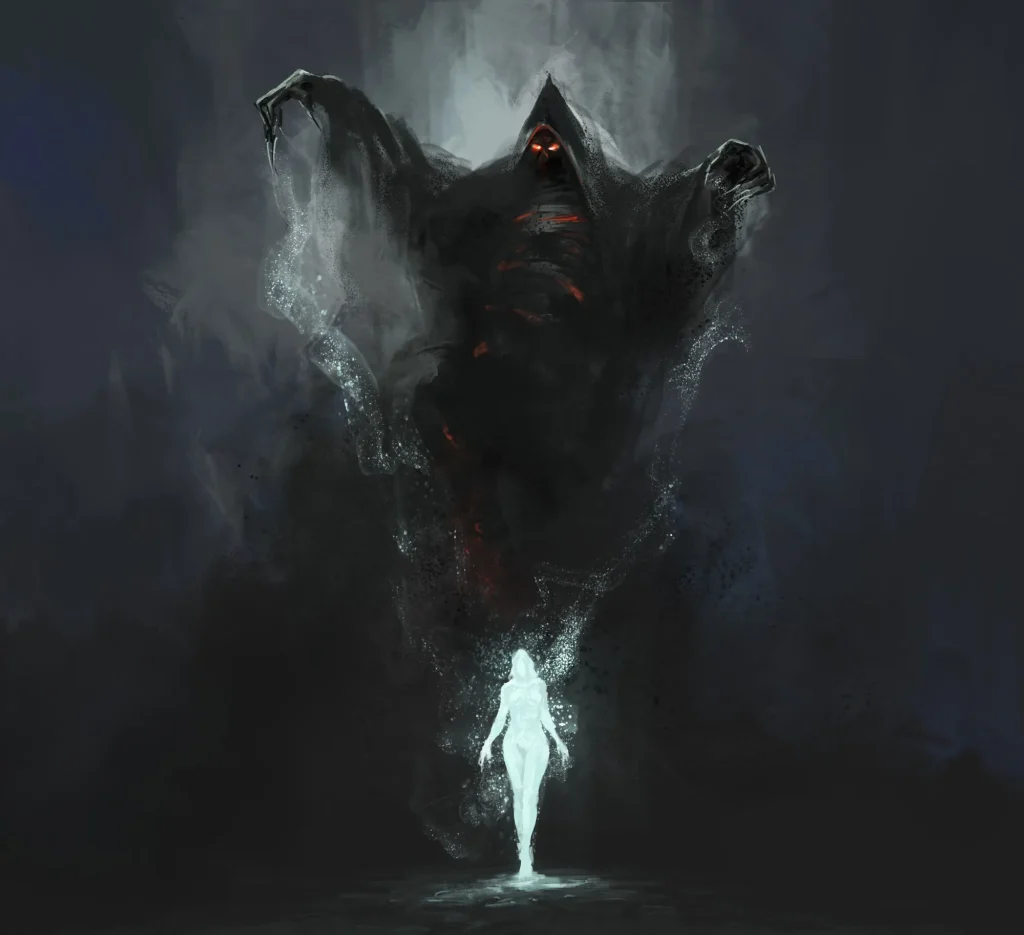
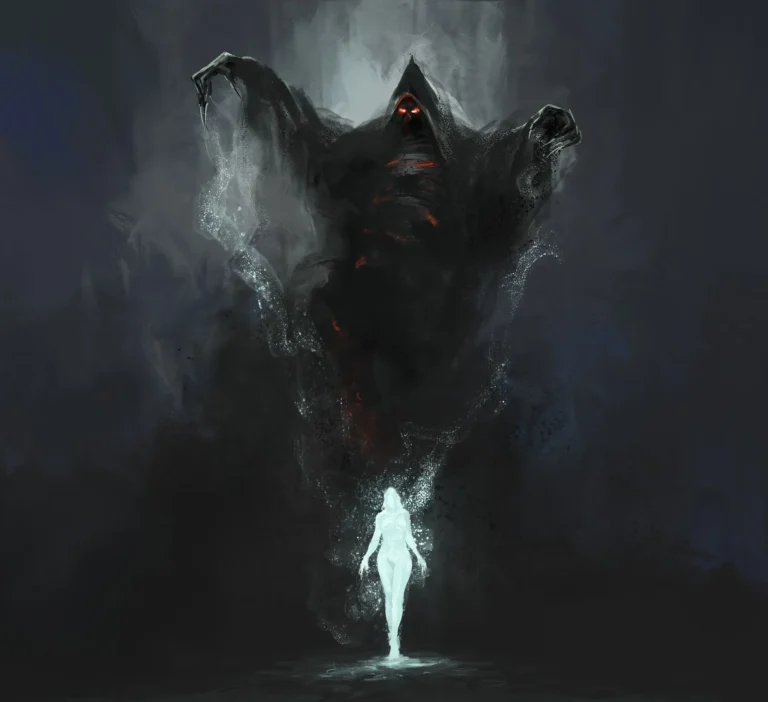
An Unleashed Pactbound may have been turned into a vessel for an ancient god.
A Warden may have befriended a guardian spirit as a child, which now protects them on every step of their journey.
Those are very different stories, characters, and gameplay styles. But they all belong to the Pactbound Archetype because they share the same foundation: their strength comes from a covenant to a patron.
The Archetype also sets the foundation for how they gain and spend resources.
Renewable resources instead of running dry
Beyond The Hearth is not built around spending a limited pool of spell slots and hoping the adventure ends before you run out.
Or, even worse, keeping everything for later “just in case”.
We all know the feeling of saving every healing potion until the final boss fight, only to finish the game with twenty potions still sitting in your inventory.
That is not really a decision.
It is just being scared to use the cool thing you have, because you lack information to make an educated guess.
Instead, each Archetype has its own renewable resource engine.
That means you generate resources through clear triggers in play, and then spend those resources on stronger features. You gain resources through tactical play, by reacting to your allies or enemies, by exploring the battlefield, or by doing something that fits the fantasy of that Archetype. As well as a save baseline each roleplay scene and combat turn.
For Pactbounds, that resource is called Favour.
A Pactbound gains a baseline amount of Favour through their covenant. They can then gain more by fulfilling the conditions of that covenant.
The exact way they do that is where the Path starts to matter.
How Paths change the Archetype engine
A Path does not throw away the Archetype engine and replace it with something completely different. It takes that engine and twists it to fit the specific fantasy.
The Covenant of the Fated is all about destiny, debt, and borrowing power from your own future.
A Fated Pactbound does not simply wait until they have enough Favour. When they need power right now, they can use their Overdraft feature to gain more Favour immediately.
The catch?
It creates Debt Cards.
That is the Fated’s whole gameplay loop:
Take the power you need now, then deal with the consequences later.
Need enough Favour to unleash a Signature? Go into debt.
Want to cheat a saving roll because failing right now would be really bad? Go into debt.
Need one last burst of power to turn the whole fight around? You already know the answer.
Every Debt Card becomes a problem you need to deal with later. Leave too much debt unresolved, and your patron will start to forcefully collect it, hurting you in the following rounds.
And that is more than just a resource mechanic.
A Fated Pactbound is not merely described as desperate, reckless, or willing to make dangerous bargains. Their rules actually ask them to make those bargains at the table.
Every time you use Overdraft, you have to decide whether the immediate gain is worth the future cost. And you can even go for risky plays, like the Signature Shylock, which deals extra damage to an enemy based on how many debt cards you currently owe.
That is what we want Paths to do.
The flavour should not just be written in your backstory. It should shape the mechanics and decisions you make while playing.
How Paths give you features
Every feature in Beyond The Hearth belongs to one of four categories.
Features can come from your Path, your weapons, your armour, adornments, or items. But your Path is where most of the defining tools of your character live.
| Feature | What it does | Cost |
|---|---|---|
| Knacks | Passive features and tactical advantages | Usually none |
| Manoeuvres | Frequent, low-cost actions | 1 Action Point |
| Abilities | Bigger, more defining actions or ongoing effects | Usually 2 Action Points |
| Signatures | Your most powerful techniques | 2 Action Points and Archetype Resource |
During a combat round, every character has four Action Points to spend.
You can save them for your own turn, or you can use some — or even all — of them as reactions to what your allies and enemies do. This makes combat flow much more naturally and, more importantly, makes teamwork feel like actual teamwork.
You are not just waiting for your turn to finally happen. You are constantly looking at what is happening on the battlefield and deciding where you can jump in. There are even some Trigger Features, that can only be used on your teammates actions. Like the Verdant Augur of the Bloomwarden, who can restrain a creature to the ground, right after a teammate knocks them prone.
Knacks
Knacks are usually passive features that reinforce the style of play your Path is going for.
The Thief of the Night, for example, can make Dodge and Escape saving rolls lucky. They roll twice and take the better result.
That is a small rule, but it has a big effect on how the character feels. The Thief is harder to trap, harder to catch, and much more likely to slip away when a situation gets dangerous.
It also means they can focus more on a full damage build instead of trying to max out their Defence. They know that, when things go wrong, they usually have a way out.
A Hunter’s Bestiary works in a completely different direction. It helps them identify and disable enemy features more easily, rewarding players who study threats and use what they learn. Hate that move the Boss just used on your team? Disable it with a precise attack, so they can’t immediately do it again.
Knacks do not usually give you a new action to press every round. Instead, they make your existing decisions more achievable and more fitting for the character you chose to play.
Manoeuvres
Manoeuvres cost 1 Action Point and are the actions characters use most often. We wanted players to always be able to do cool shit, even if they just used up all their Archetype Resource or want to save it for a more costly Signature in the next round.
Every character has access to general Manoeuvres like grappling, shoving, and protecting and covering an ally. Paths then add their own specialised Manoeuvres on top.
A Fated Pactbound might cheat a saving roll in exchange for another Debt Card. Or they might throw an orb of dark energy that tears away part of an enemy’s existence.
These are the things you will use constantly during a fight, which means they are also where a Path’s identity becomes part of the moment-to-moment gameplay.
A Thief should not only feel like a Thief when they use their biggest ability once or twice per combat. They should feel like one in the small decisions too.
Abilities
Abilities are bigger actions that cost 2 Action Points.
Not every Path has them, but when they do, they usually define a major part of how that Path works.
A Bard of the Court of Songs, for example, can spend 2 Action Points to change their Tune. A Tune is an aura that supports allies and remains active until the Bard chooses another one.
So the Bard is not just casting a temporary buff and then moving on. They are actively setting the tone of the fight, deciding how they support the group, and changing what tactics make sense for the enemies and the environment.
The Verdant Path, Augur of the Bloomwarden, can summon Sprawls: minion plants that each bring a different change to the battlefield.
Their player literally overgrows the battlefield with every passing round and decides which part of that growing network to activate when the situation changes.
That is exactly the kind of thing we want from a Path. You should not just have a plant-themed spell. You should feel like you are slowly taking over the battlefield with living nature. While a Berserker Fury of the Beast may send enemies flying into walls or a Warrior Art of the Sword, who can slashes through hoards of minions with a precise, anime-like strike.
Signatures
Signatures are your most powerful features.
They cost 2 Action Points and a certain amount of your Archetype Resource. In the Pactbound’s case, that means spending Favour.
This is where your resource engine turns into the big moments: powerful attacks, defensive tools, dramatic transformations, battlefield-changing effects, and all the other things that make everyone at the table go: “Wait, you can do that?” – sometimes even the Narrator (our Gamemaster).
When you level up, you can learn new Signatures from a list exclusive to your Path. Those Path Signatures form the core of your personal gameplay loop and you can pick and choose, based on how you want to play your character.
We decided against shared spell lists, even though that means a lot more work for us when designing new Paths.
But it also means every Path can feel really unique.
Of course, that does not mean your character can never learn anything outside their own Path. If it fits the story, you can still gain features from other Archetypes and Paths in different ways: finding a teacher, translating an ancient tome, training during rests, or teaching each other over the course of the campaign.
Weapons matter here as well.
Every weapon you actively carry grants two weapon-specific Signatures, a Knack, and a Manoeuvre. Equipment is not only about numbers going up. It can expand your options, help you prepare for a specific enemy, increase your strengths, or cover for weaker areas.
There is not just one Longsword with slightly better damage. There are dozens to choose from, all with their own features, so you can build something that actually feels interesting to play.
Your Path determines who you are in general.
Your weapons and equipment determine how you prepare for the next challenge.
Why this structure matters
The Archetype-and-Path structure is meant to make character choices more meaningful without making character creation harder to understand. I clearly remember being overwhelmed with DnDs 5.5 dozens of “hidden” subclasses. And while you might scroll through a few different Archetypes and Paths, before you land on a choice that fits your character, you can pretty quickly single out which ones are might be a fit. That’s why we are also working on a Tag system, which let’s you quickly filter for your desired playstyle, like “Summon”, “Companion”, “Ranged”, or “Area Of Effect”.
An Archetype gives you a clear starting point. You can look at Pactbound and immediately understand the broad fantasy: power gained through a covenant.
The Path then lets you choose the version of that fantasy you actually want to play.
Do you want to gamble with fate and borrow from your future?
Do you want to become the vessel of something ancient and dangerous?
Do you want to protect your friends with the help of a guardian spirit?
Those choices do not just change your backstory or give you a different spell list.
They change your resource loop, your risks, your strongest features, and the way you approach combat and roleplay scenes.
That also creates a lot more replayability.
You could spend an entire campaign playing different Paths from the same Archetype and still have a genuinely different experience every time.
A Pactbound of the Fated does not play like a Warden, an Unleashed, or a Pactbound of Betrayal. An Explorer on the Way of the Wildkin does not play like an Explorer on the Way of the Beast Slayer.
Even characters with similar themes or party roles can have entirely different reasons to act, resources to manage, and problems to solve. Want to have a campaign with four Warriors? Go for it!
That is what we want character options to do in Beyond The Hearth.
They should not just give you a new name for the same familiar decisions.
They should make you see the table differently and bring their own challenges and rewards.
What comes next
This article is the foundation for the individual Path articles to come.
Now that you know the difference between Archetypes and Paths, we can really dive into specific Paths: its fantasy, its resource loop, its features, and the kind of stories it supports at the table.
The Covenant of the Fated is only one example.
There are many more ways to make a bargain, take a risk, protect a group, hunt a monster, lead a battle, or change the world and people around you.
Beyond The Hearth is still in development, and some details will most likely change as we test the game. We are currently building our first Adventure Playtest: around eight hours of content designed to ease you into the system step by step.
No 400-page rulebook the Game Master has to preread. No two-hour character creation before you can finally start playing.
Just jumping in and having fun at game night.
Join the waitlist to follow the project and hear when the free playtest is ready.