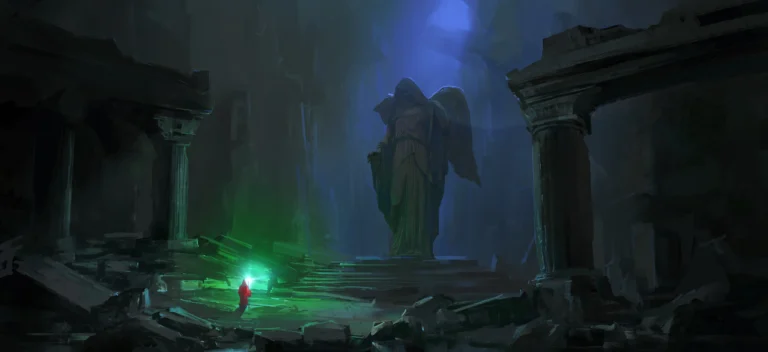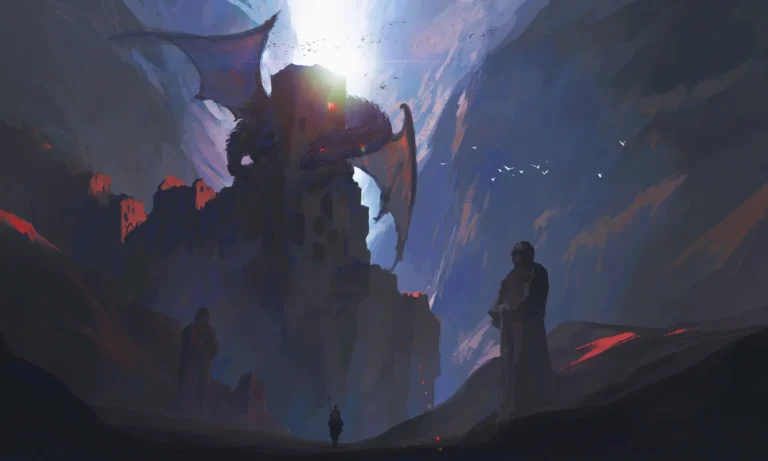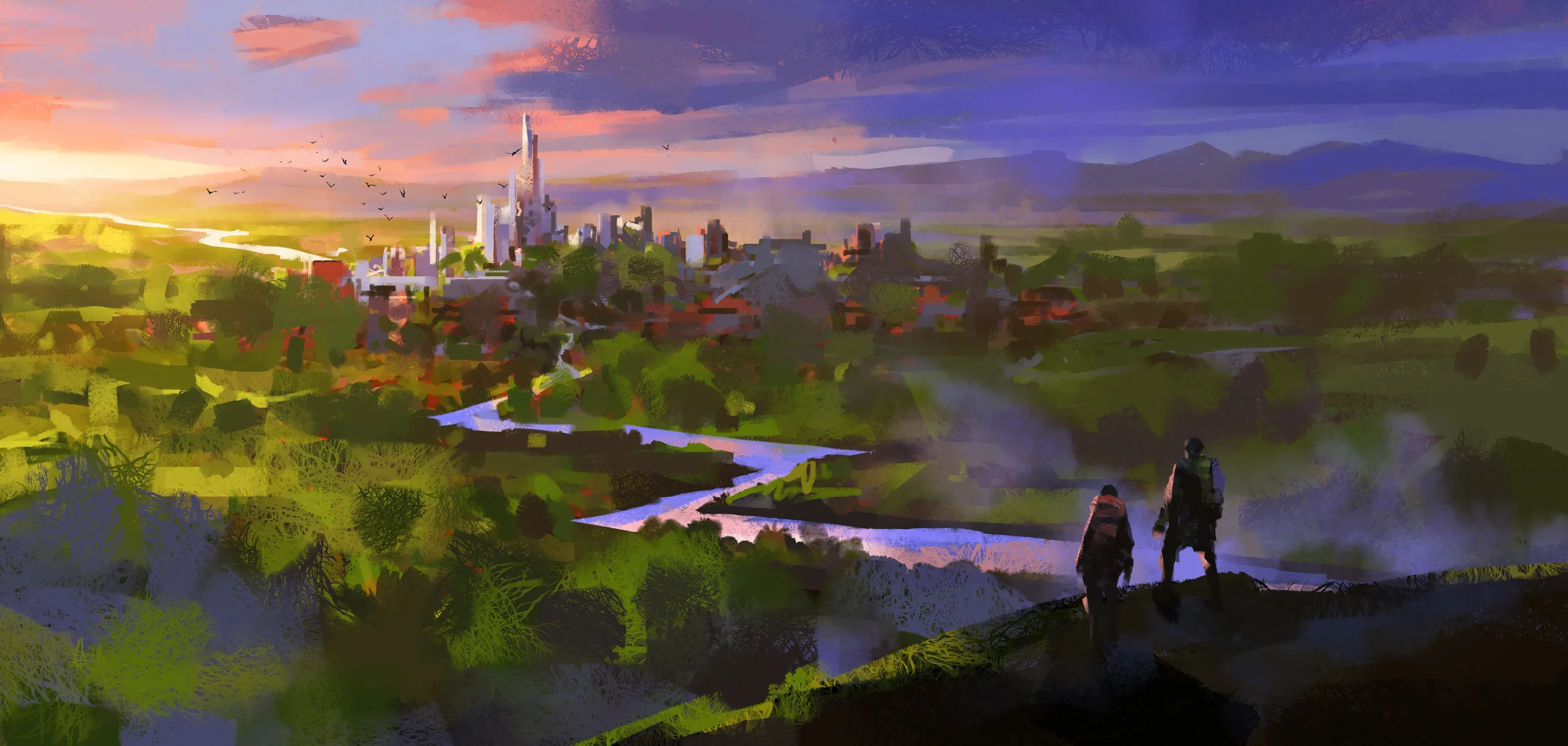
All illustrations by the talented liuzishan on Magnific
Table of Contents
I don’t like travel and exploration in TTRPGs.
Which is a bit of a problem, considering I’m currently building a fantasy RPG where leaving the safety of civilisation and venturing into the wilds is supposed to be a major part of the game.
And the strange thing is: I love exploring in real life.
I recently filmed a day in the mountains without much of a plan. Just walking, climbing and seeing where the trail would take me. And whenever I’m in the mountains, whether close to home or somewhere completely new while travelling, I get this almost childlike sense of wonder.
Colours somehow feel more vibrant. Shadows fall across the landscape in interesting ways. The sky seems impossibly large.
You climb over rocks, cross flowering plains and walk through forests that look like they could hide something mythical. Then you reach a ridge and suddenly an entirely new landscape opens up in front of you.
And immediately you start wondering:
What’s over there?
Can I reach that peak?
Where does this path lead?
What is behind that forest?
That, to me, is exploration.
And I don’t think you can capture that feeling with a single Survival roll to determine how difficult travelling from A to B was.
I want to see and feel the surroundings. I want to decide where to go next. I want to choose the strange path simply because it looks more interesting. I want to discover new places, meet people I didn’t know existed and, because this is still a fantasy RPG, occasionally find some shiny loot.
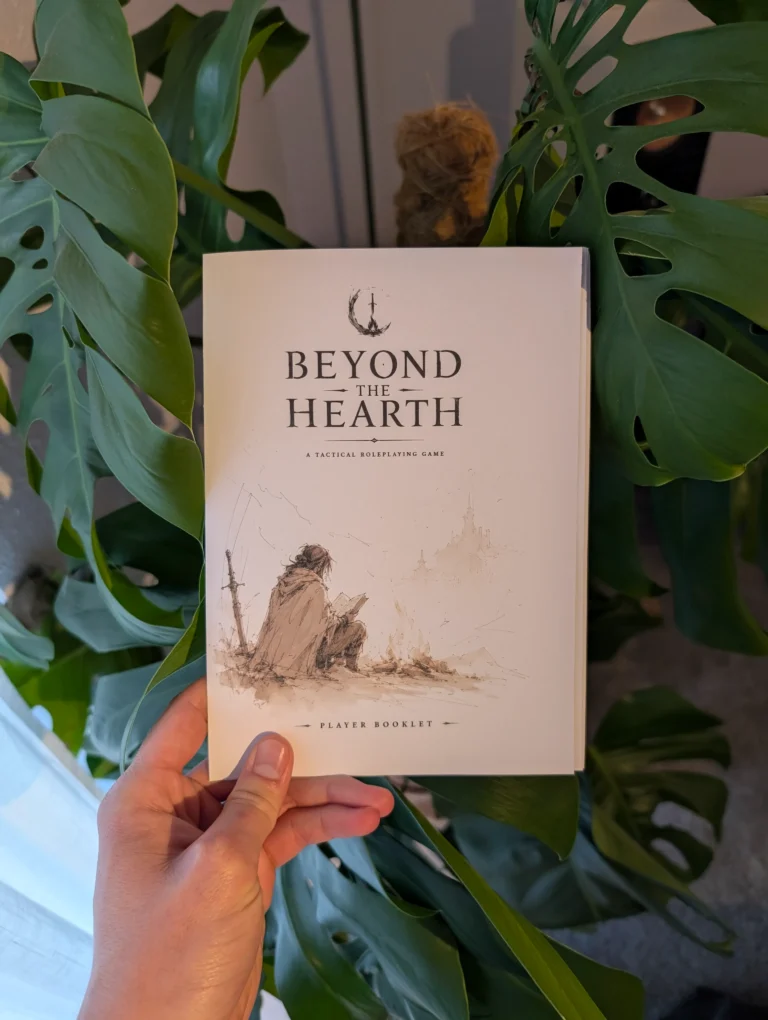
This is something I’ve been struggling with while designing Beyond the Hearth. The wilds are supposed to be places of danger and vivid wonder.
But travel very easily turns into the bit you skip so the actual story can continue.
So I’ve been experimenting with ways to make travel and exploration in TTRPGs feel like part of the adventure rather than the loading screen between adventures.
These are the five tools I’ve found most useful so far. None of them require a particular ruleset, and you can use them in almost any campaign.
1. Turn Travel Into a Series of Scenes
My first change was simple: Travel should not be one roll.
Instead, treat a journey as a small series of scenes.
These scenes don’t all have to be dramatic encounters. In fact, most of them probably shouldn’t be. Their job is to communicate what it actually feels like to travel through this particular part of your world.
Think about the area the party is moving through.
Which animals live here?
Which plants grow nowhere else?
What does the air smell like?
What does the ground feel like underfoot?
What is the weather doing?
Perhaps an ancient fire shaped the forest decades ago and blackened trunks still rise between the new trees. Maybe local merchants travel this road with heavily laden carts, leaving a stamped down road. Perhaps a bandit group operates nearby, huge beasts migrate through the valley this time a year or a strange cult worships an enormous sentient flower.
Not all of these things need to become encounters.
Sometimes seeing something is enough.
A herd moving across a distant hillside can make a region feel alive without requiring combat. A peculiar flower growing along the road tells you something about the environment. Smoke rising beyond the next ridge immediately creates a question.
And whenever the party reaches somewhere with a good view, tell them what they can see.
Because visibility creates choice.
If players can see a ruined tower in one direction, a lake in another and a distant settlement further along the road, there is no longer this weird rhetorical question of “you see a road, do you follow it?”. Of course we follow the road you just placed here, what else are we supposed to do?!
But if there is a fork in the road, players know how each path roughly looks, and what may await them at the end, you got actual informed decisions, choices and exploring.
2. Prepare Flexible Points of Interest
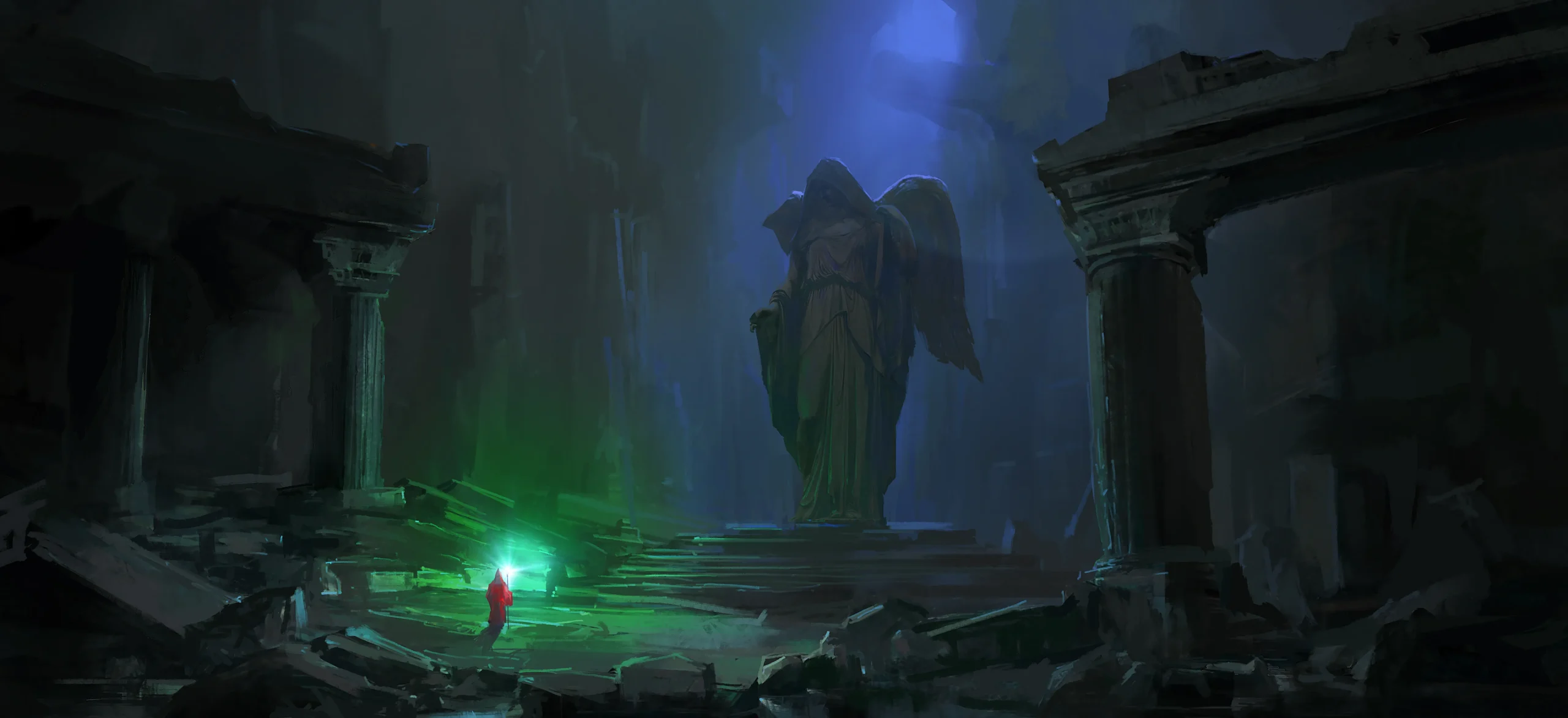
Of course, giving players things to see only works if there is actually something to discover.
So the second tool is points of interest.
Prepare a handful of interesting places for the region, but don’t decide too precisely where every single one has to be.
A shrine overgrown with luminous moss might be hidden somewhere in the forest. An abandoned watchtower could stand on one of several ridges. A strange travelling merchant might appear along whichever road the players decide to follow.
This gives you enough structure to make exploration rewarding without having to build every square kilometre of your world in advance.
It also means unused ideas aren’t wasted.
If the players never investigate that ruined tower, you can move it somewhere else later. Unless you’ve already established its exact location, they will never know.
For each point of interest, you usually don’t need much.
A strong visual idea, a little bit of local history, something to interact with and perhaps a reward are often enough.
And rewards don’t always have to mean treasure.
A shortcut through the mountains, knowledge about a nearby threat, a friendly NPC, a safe place to camp or even just an incredible view can all make exploring worthwhile.
The important part is that when players decide to leave the obvious path, something happens.
Their curiosity gets rewarded.
3. Use Exploration to Tell the Story of Your World
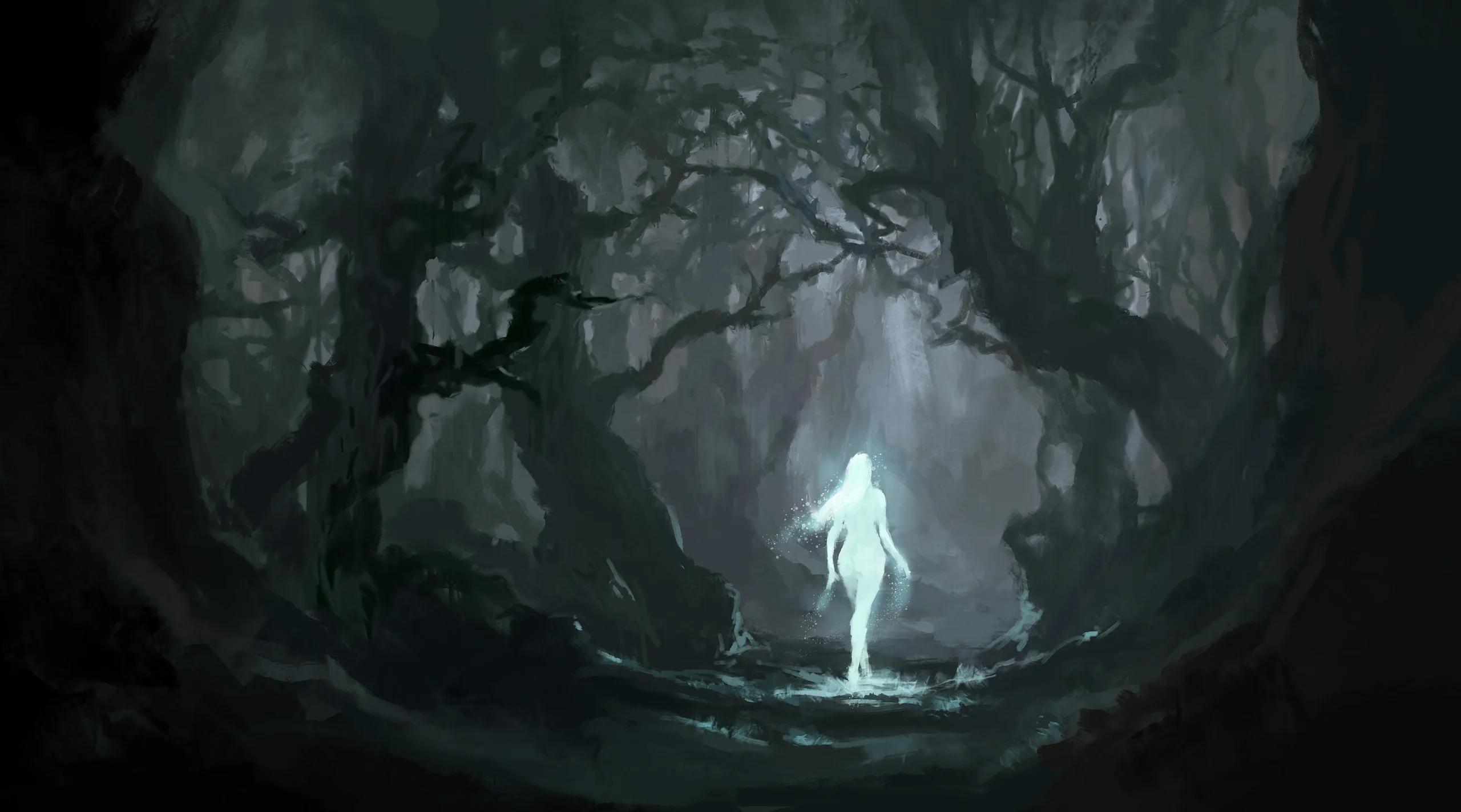
Exploration is also one of the best opportunities to deliver lore.
Not through a ten-minute history lecture.
Through things the players actually discover.
Travel usually has a slower rhythm than combat or a dramatic social encounter. That makes it a great place to introduce all those background ideas about your world that might otherwise never make it to the table.
Let NPCs tell stories.
Let players find old books, carvings, campsites and ruins.
Let the landscape show what happened here last month or a hundred years ago.
Maybe people in a village tell stories about something enormous living beneath the nearby lake. Later, from a ridge, the party sees that lake in the distance.
Suddenly the landscape means something.
Maybe travellers speak about a flying predator nesting high in the mountains. The party then has to cross a completely exposed valley beneath those peaks.
Is the legend true?
Was that distant shape actually moving?
Would travelling beneath the trees be safer, even if it takes longer?
That is where lore becomes more than flavour text.
It starts influencing decisions.
The world becomes something the players can understand, speculate about and eventually learn to navigate.
And ideally, discovering more about it creates speculations and even more things they want to investigate out of their own curiosity.
4. Break Up Repetitive Rolls With Small Minigames
I’m a huge fan of occasionally changing how the game works.
If attacking, fishing, hunting, foraging, climbing and balancing across a river all eventually become: “Roll the relevant skill. You need a 15.”
then these activities start feeling strangely similar and we lose the difference we created through character creation.
So for all rolls that may take a little more time and important moments during travel, I like using small minigames.
They don’t need an entirely new page of rules.
In fact, they probably shouldn’t.
The mechanic should be easy to explain, fit the situation and ideally contain some kind of risk versus reward.
Crossing a dangerous river might involve choosing between safer stepping stones and a faster but unstable route. Hunting could involve deciding how long the party wants to spend tracking an animal before night falls. Foraging might tempt players deeper into unfamiliar terrain in exchange for rarer ingredients.
Characters who would naturally be good at the activity should still have an advantage. The goal isn’t to throw away their abilities. It’s to present those abilities in a slightly different context.
And sometimes you don’t need a completely new mechanic at all.
Even turning a normal check into a group challenge can change the entire feeling.
For example, everyone rolls and the group needs more than half of the party to succeed. A critical success counts as two successes, while a critical failure counts as two failures.
Then resolve the rolls one at a time.
One character succeeds.
The next fails.
Someone rolls a critical failure and now the final player needs to somehow save the situation.
This naturally creates a conversation around what characters are actually doing rather than simply asking everybody to roll at once and counting the results.
How does the Explorer help someone across?
Can the Wizard use a spell creatively?
Did someone bring a rope as a safety net?
Small mechanical changes can turn an otherwise forgettable obstacle into a memorable scene.
Always focus on doing things together. I mean this is why you all met up for game night, right?
5. Give Players a Map Worth Exploring
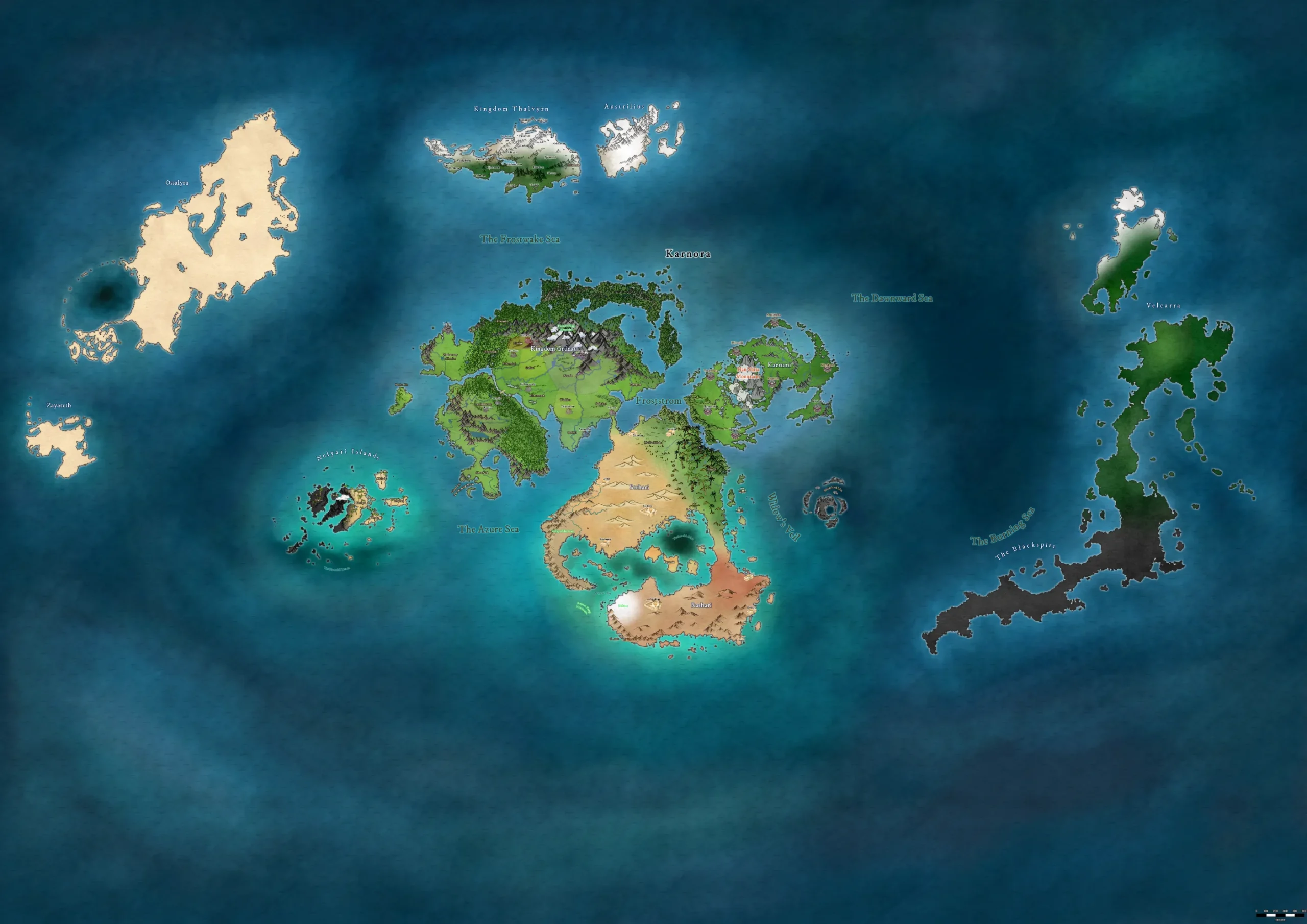
A few weeks ago, I finally took the time to properly draw the world map for Beyond the Hearth.
I used Wonderdraft, but the tool really doesn’t matter. You can use another piece of software, draw it in Photoshop or simply grab a sheet of paper and a pencil.
RedQuill’s maps are a great reminder that you really don’t need complicated software to make a world feel tangible.
What matters is putting the world somewhere you can actually see it.
And this helped me far more than I expected.
A map forces you to think about how places relate to one another.
Where are the mountains?
Where do rivers flow?
Which settlements would actually trade with each other?
Where would roads develop?
Where are the vast empty spaces that desperately need something interesting?
Then start adding the things that make the world worth exploring.
Mark ancient ruins.
Draw places connected to local legends.
Add the territories of legendary creatures.
Put in unusual natural landmarks, villages, trade routes and places travellers would talk about around a campfire.
This does two things.
First, it helps you as the GM understand your own world.
But more importantly, it helps the players understand that there is actually something out there.
A labelled mountain range, an ominous symbol in a forest or a strange structure drawn somewhere beyond the main road immediately creates curiosity.
The map stops being purely a navigation tool.
It becomes a promise.
There are things here worth finding.
But of course, it is still an important navigation tool. You know all the nooks and crannies of your world, but each player might imagine it differently. Most of the time, that’s perfectly fine, even beneficial, as imagination fills in the gaps. However, it’s important to make sure everyone is on the same page when it comes to the bigger picture.
And, I know I’m repeating myself, but informed decisions and player agency are the most important parts of a TTRPG. If your players don’t have choices, they feel like you read them a story. They instantly lose connection to the world and their characters in it.
If you give them actual agency over how the story develops, where they travel to and which path they choose, they suddenly feel much more involved.
Bonus: Use the Elden Ring Rule
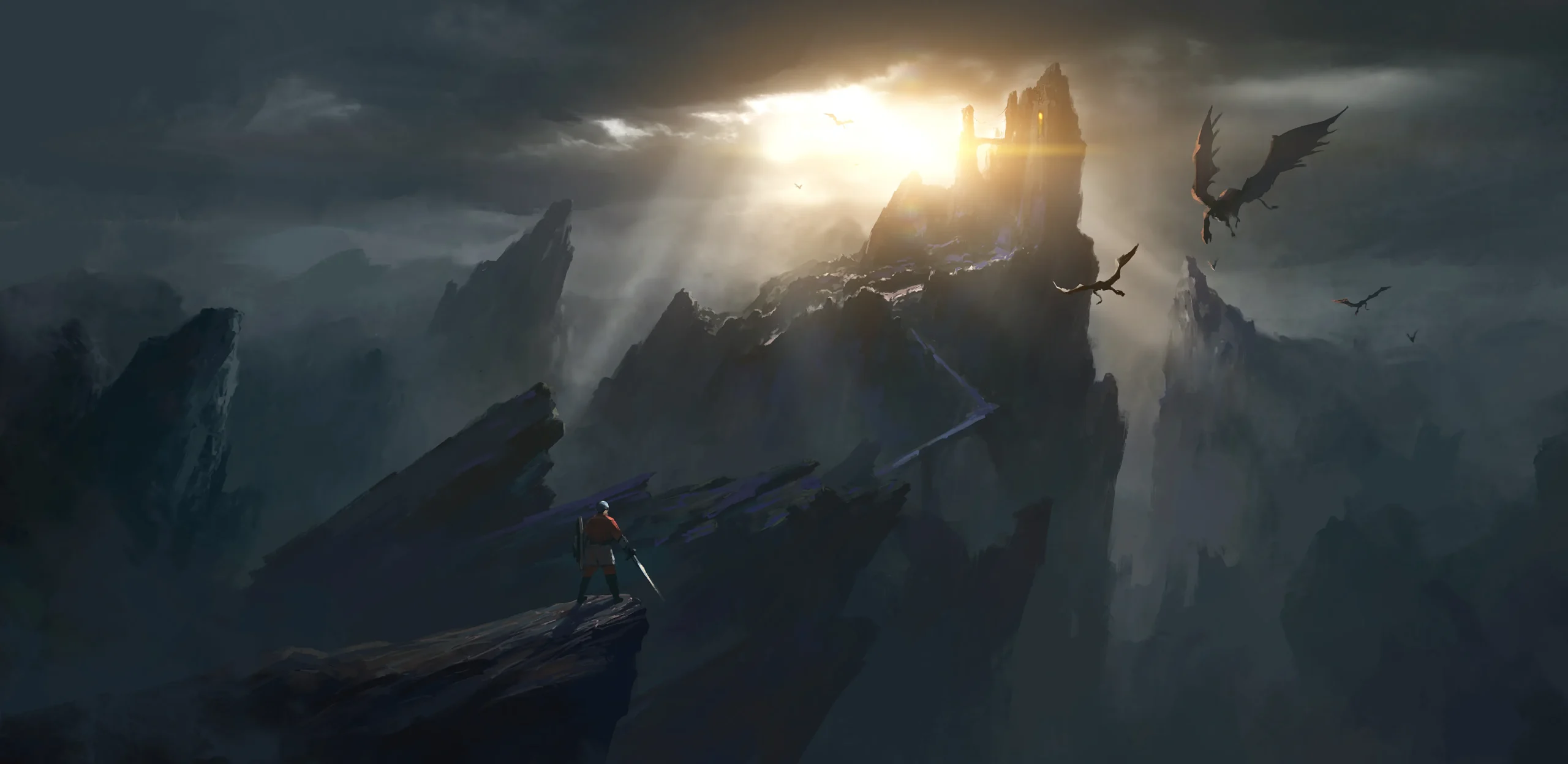
There is one final idea I’ve started thinking of as I played Elden Ring:
Whenever players discover one interesting place, let it reveal another one.
Or two.
Or three.
You reach an old watchtower and can see a ruined fortress further into the mountains.
Inside the watchtower, you find a journal mentioning a shrine somewhere in the valley below.
From the top, you can also see smoke rising from deep within the forest.
Now the players have options.
And, more importantly, those options came from exploring.
This creates a simple loop:
You see something interesting.
You decide to investigate it.
You discover something.
That discovery reveals several new possibilities.
And suddenly exploration doesn’t require the GM to constantly push players towards the next location.
Curiosity does the work for you.
Make the Journey Part of the Adventure
I don’t think travel in TTRPGs needs to become an elaborate subsystem with weather tables, movement calculations and three different resources to track, though those might introduce flavour and fun as well.
I want the wilds to feel like a place.
I want players to crest a hill and wonder what they are looking at.
I want them to feel stalked in the forest and vulnerable in an open plain.
I want old legends to change how they cross a valley. I want them to take the wrong path because something in the distance looks interesting. I want them to remember a strange forest, a terrifying river crossing or the tiny shrine they found somewhere miles away from civilisation.
And sometimes I want them to forget where they were originally going because they just discovered something much more interesting.
Because that’s what exploration feels like to me.
Not calculating how difficult the journey was.
But looking at the world in front of you and thinking: I wonder what’s over there.
For Beyond The Hearth I’m trying to implement as many parts of this mechanically into the TTRPG as possible, so exploration and travel don’t feel like an afterthought and instead making it easy for the Gamemaster.
What’s your favourite travel/exploration mechanic in a TTRPG?
Cheers, Jonas