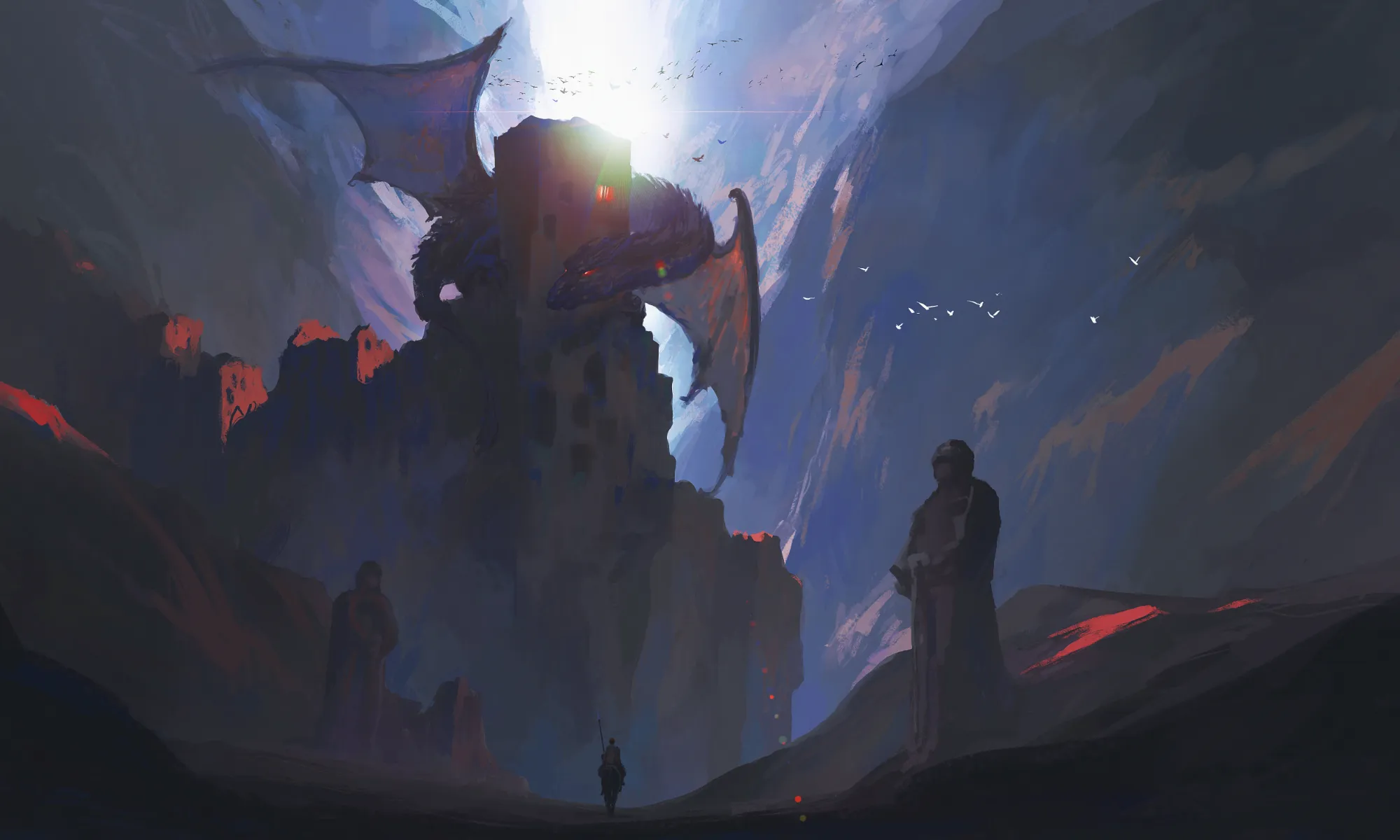
All illustrations by the talented liuzishan on Magnific
Table of Contents
You spent hours preparing your next D&D boss fight, carefully crafting the story behind it.
The ancient vampire has been hunting the party for half a campaign. He has a tragic backstory, a cool entrance, probably a monologue he practised in front of a mirror for several centuries, and a stat block with enough hit points to survive a small war.
Then initiative is rolled.
The Paladin lands a crit. The Wizard locks him down. The Rogue appears from somewhere behind a pillar that absolutely was not there before. The Cleric buffs everyone. Your terrifying final boss gets two turns, maybe three, and then dies on the floor of his own dramatic throne room.
Been there, done that.
I’ve also done the exact opposite: A sloggish, draggy Boss fight with too many minions.
So where’s the sweet spot and how can we make sure to reach it every time?
The good news is that a memorable D&D boss fight does not need a bloated stat block or a surprise TPK to feel dangerous.
A great D&D boss fight is not just a creature with more hit points and a bigger sword. It is a story beat with an epic build up that should leave a lasting impression.
The party should feel powerful. They should get to use the abilities they have been waiting for all campaign. But the boss should also feel like a real threat with a plan, a home-field advantage, and enough tools to stay part of the fight.
Here are seven D&D boss fight tips I keep in mind when creating epic encounters for my table.
1. Give the Boss Something to Do Between Turns
A party of four adventurers does not take one turn per round.
It takes four.
That means four Actions, four sets of movement, several spells, reactions, healing options, control effects, and plenty of opportunities to focus all damage onto one very unfortunate creature.
A solo boss usually gets one turn.
In a D&D boss fight, that difference becomes especially noticeable when one creature has to keep up with an entire party.
That is why a powerful enemy can sometimes feel strangely absent from its own fight. It acts once, then has to stand there while the entire party reacts, repositions, attacks, buffs, debuffs, and comes up with a new plan before it gets another chance to do anything, even tho the boss should feel tactical, pressuring and interesting.
D&Ds Legendary Actions are one of the best ways to solve this.
They do not need to be huge attacks. In fact, the most interesting ones often aren’t dealing straight up damage.
Let the boss move towards the backline cleric and give the frontline something to protect. Let it destroy a pillar that comes crushing down onto the Rogue trying to hide behind it, pull someone away from their allies, or prepare a larger attack that the party can interrupt or escape.
The important part is that the boss stays present.
A dragon should not quietly wait in the corner until its next turn. It should beat its wings, move across the room, tail slap the Rogue, or make the Cleric rethink every decision that led them here.
2. Bring Minions, but Give Them a Job
A lot of GMs want the final fight to be a clean one-versus-party duel.
I get it. The party has spent months chasing this one villain. It can feel strange when the Archlich suddenly brings six sidekicks to the final showdown.
But from the Archlich’s perspective, bringing skeletons is actually a very sensible decision.
The party brought a Fighter, a Rogue, a Cleric, and a Wizard.
Why should the villain walk into that room alone?
Minions are not there just to make the encounter harder or make it feel sloggish. They are there to create decisions.
A good minion should have one clear job:
- Protect the boss. Block paths, threaten opportunity attacks, or stand between the party and the villain.
- Pressure the backline. Give the Wizard and Cleric something to worry about besides casting their best spell every turn.
- Support the boss fantasy. A pirate captain has a crew. A necromancer has undead servants. A corrupted druid has beasts, roots, or something that probably should not have that many eyes.
- Hold an objective. Cultists keeping a portal open can be more interesting than cultists simply making attack rolls.
Keep them simple. Low hit points, quick turns, one purpose.
It’s important that they don’t drag out the fight more than a D&D fight already is.
If I as a player have to wait half an hour until I may try again to not fail that saving roll and not be restrained by that one minion, I’m ill in the next session.
Three weak enemies with a clear communicated role can make a boss fight more memorable than another 150 hit points ever could.
3. Make the Battlefield Matter
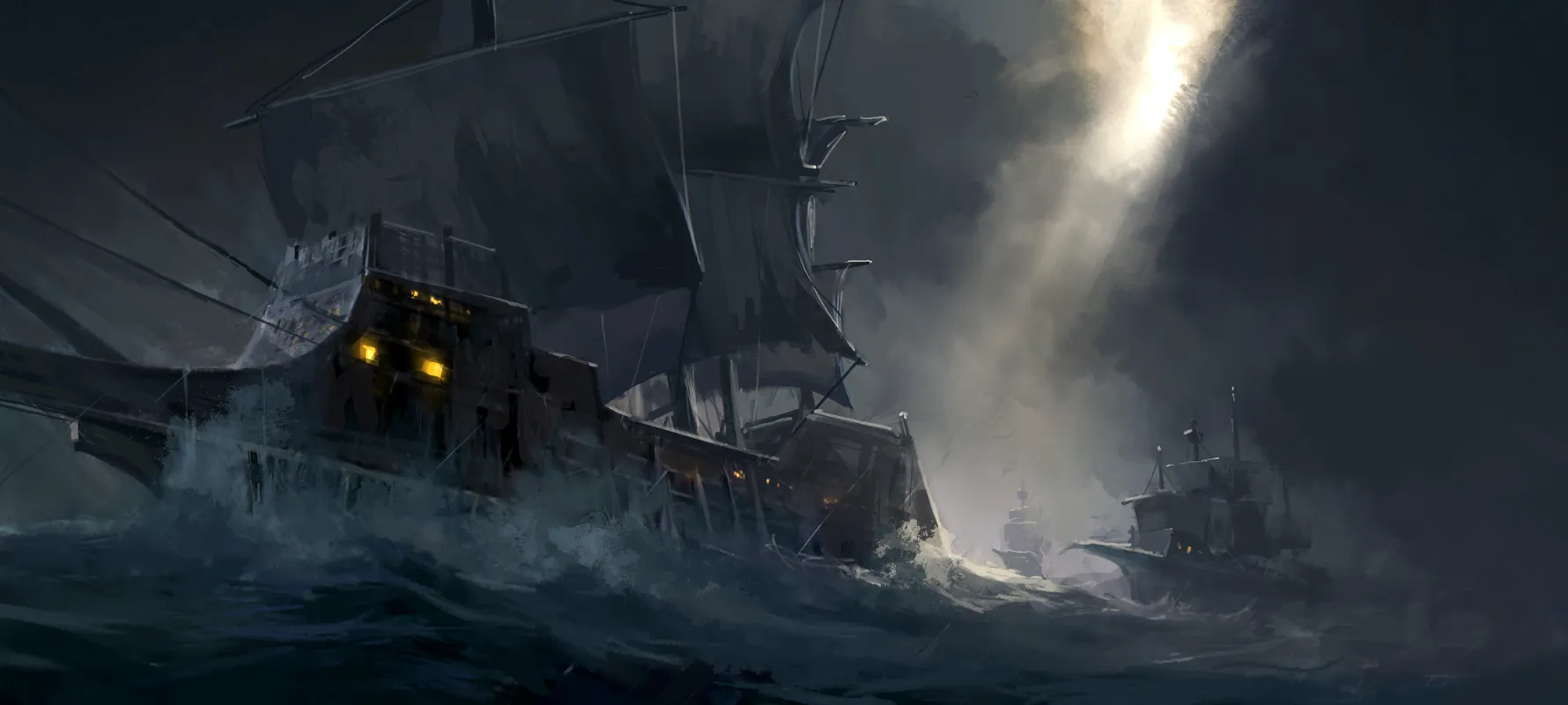
A good D&D boss fight arena should not be a large empty room where everyone forms a circle around the villain and smacks him for six rounds without needing to move.
The boss should have a home-field advantage.
A large sea monster might crash into the ship, making things tumble all over the place or cause a player to go overboard.
A fire elemental might fight in a collapsing forge where molten metal slowly spreads across the floor.
A vampire might fight in a ruined ballroom where mirrors become teleportation routes.
A cult leader might be protected by an unstable ritual circle that changes every round, weakening certain damage types or disrupting a certain spell slot level.
The key is to create choices, not random punishment.
“Everyone takes 2d6 fire damage because the room is on fire” is not particularly interesting.
“The floor beneath the ritual circle is cracking apart, and anyone standing there will be cut off from the rest of the party next round” gives players something to react to.
Good encounter design makes people look up from their character sheets – or their phones – and start scheming as a team.
4. Give the Party More Than One Problem
The easiest way to make a boss fight less repetitive is to give the party something to do besides reducing the boss’s hit points.
Maybe the villain is trying to finish a ritual.
Maybe the room is collapsing.
Maybe prisoners are trapped behind a barrier.
Maybe the boss is trying to escape with an artefact the party needs or the villain should definitely not posses.
The goal should not be to force the party to ignore the boss. The boss is still the centrepiece.
But now the players have to make choices.
Do they focus the boss before the ritual finishes?
Do they kill the cultists first?
Who deals with the collapsing bridge?
Who protects the Wizard while they disable the magical barrier?
Once there is more than one thing happening, every turn becomes more interesting.
5. Telegraph Big Threats Before They Happen
A boss should be dangerous.
But danger feels much better when the players can see it coming.
A huge attack that appears out of nowhere and drops two characters can feel less like a dramatic moment and more like unfair closing credits.
Instead, show the party what is about to happen.
The dragon draws in a breath and his chest begins to glow from the heat.
The cult leader raises their hands as the ritual circle starts pulling people towards its centre.
The corrupted knight plants his sword in the ground and shadow gathers around the blade.
Now the players have information.
They can run, interrupt the ability, protect an ally, use a spell creatively, or decide that now is finally the time for a fireball.
Pressure should not feel unfair. Players can only make meaningful decisions once they have enough information to understand the danger.
And when they survive the thing you clearly warned them about, it feels earned.
6. Let the Fight Change Halfway Through
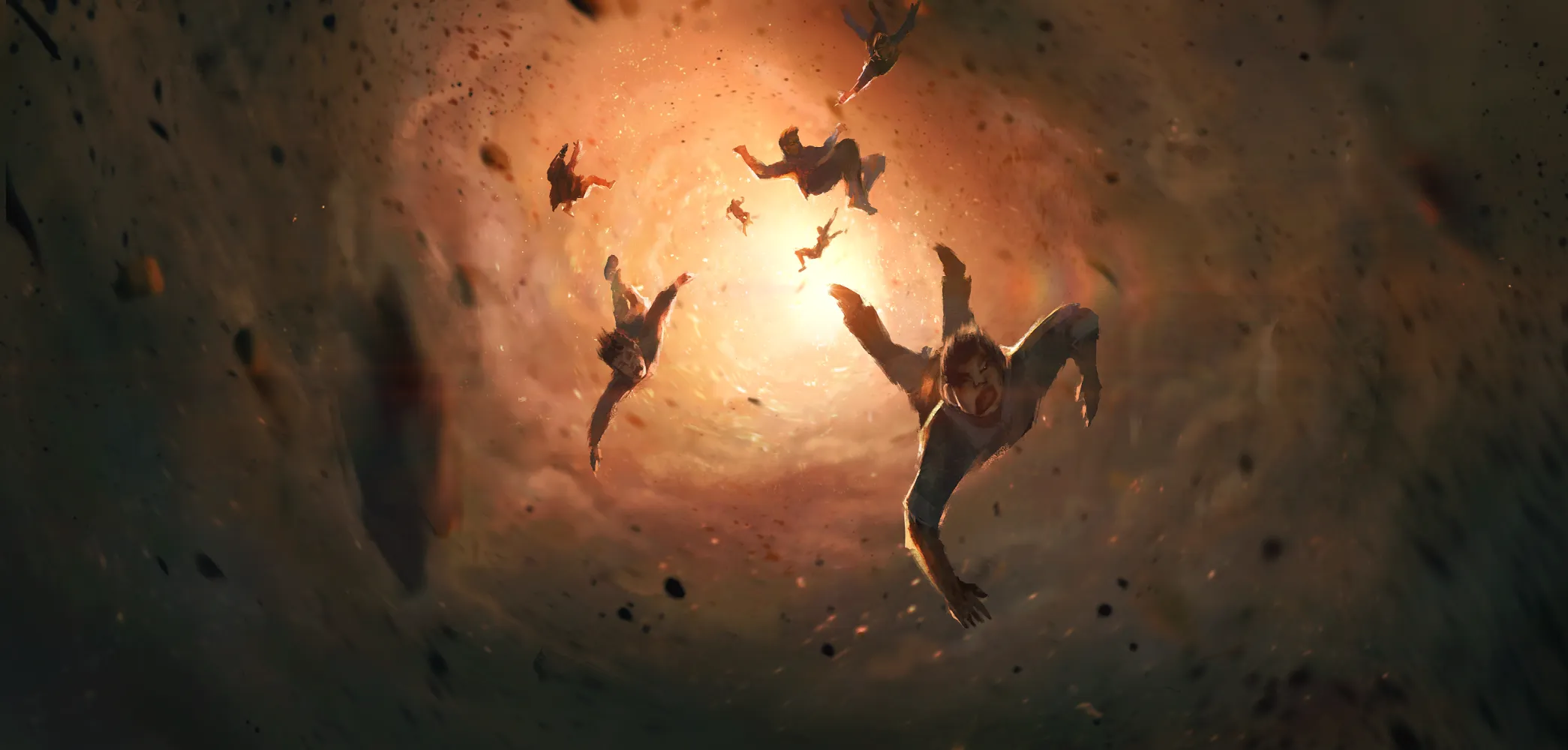
A lot of memorable boss fights have phases.
The best D&D boss fights change the situation before the encounter becomes a simple race to zero hit points for either side.
A second phase stops the encounter from becoming “we keep attacking until the hit points run out”.
At around half health, something should change. Maybe even at each third.
The boss reveals a new form.
The ritual reaches its next stage.
The room begins to collapse.
The villain flees into a new area.
The ancient weapon breaks and releases whatever was trapped inside it.
The boss should not simply get more damage and another attack.
A good second phase changes the needed tactics, so players have to adapt.
Maybe the first phase is about reaching the boss through their guards and magical defences.
Then the relic breaks, the guards die, and suddenly the boss becomes faster, more desperate, and much more willing to charge directly into the group.
The players should feel that their progress matters.
They are not just removing hit points. They are forcing the enemy to change.
Bonus Points if phases also change which players are the core of the battle.
Maybe the first half makes the frontliners important damage dealers and the backline is more in a supportive roll.
In the second phase the frontliners have to become protectors of the backline so they can deal the damage.
7. Make Sure Everyone Gets a Cool Moment
The best boss fight is not one where the boss gets to show off.
It is one where the entire table gets a story they will still talk about three sessions later.
The Fighter should get to hold the line.
The Rogue should find a dangerous opening dealing stupid amounts of damage.
The Wizard should have a clever spell moment.
The Cleric should get somebody back on their feet at exactly the right time.
That does not mean you need to hand every character a scripted spotlight. It just means the encounter should give different kinds of characters something meaningful to do.
A boss that only stands still and attacks the nearest target might be fine for the Fighter.
It gives the Rogue, Wizard, and Cleric far less to think about.
Movement, objectives, enemies in the backline, hazards, and changing terrain give everyone a reason to engage with the fight in their own way.
And it’s totally fine that some fights revolve more around certain players. Keep it in mind for the next fight to then give the other ones the mechanical spotlight.
A Quick D&D Boss Fight Checklist
Before you run your next D&D boss, ask yourself:
- What can this boss do between turns?
- Who or what protects the boss?
- What makes this arena different from an empty room?
- What other problem needs attention besides the boss?
- What big threat can the party see coming?
- What changes when the boss starts losing?
- What can each character do that feels cool?
You do not need all seven ideas in every encounter.
A smaller boss fight might only need an interesting arena and a few minions.
A final campaign villain might use all seven.
The important part is that the fight has a story of its own.
And communication is always key, as with everything in life.
Talk to your players, narrate cool moves and changes on the battlefield, so they can make an informed decision about how to deal with the newly formed threat.
Final Thoughts
An epic D&D boss fight does not need to invalidate the party’s cool abilities to be memorable.
Let the Paladin crit.
Let the Wizard land the control spell.
Let the Rogue find the perfect angle.
Let the Cleric save the day.
But give the villain enough room to react, move, adapt, and fight for the story too.
Because the best boss fights are not the ones where the players barely survive.
They are the ones where everyone at the table sits back afterwards and says:
“Alright. That was actually sick.”
And then immediately starts arguing about who almost got everyone killed.
If you want to learn more about how we are giving Gamemasters the tools to make every fight in our upcoming TTRPG, Beyond The Hearth, feel epic, you can read more about our encounter design here.
Or join the waitlist for our upcoming free playtest adventure. It includes around eight hours of content and lets you jump straight into the game, both as a Gamemaster or Player. See you the next time, in the hearth!
Cheers,
Jonas